
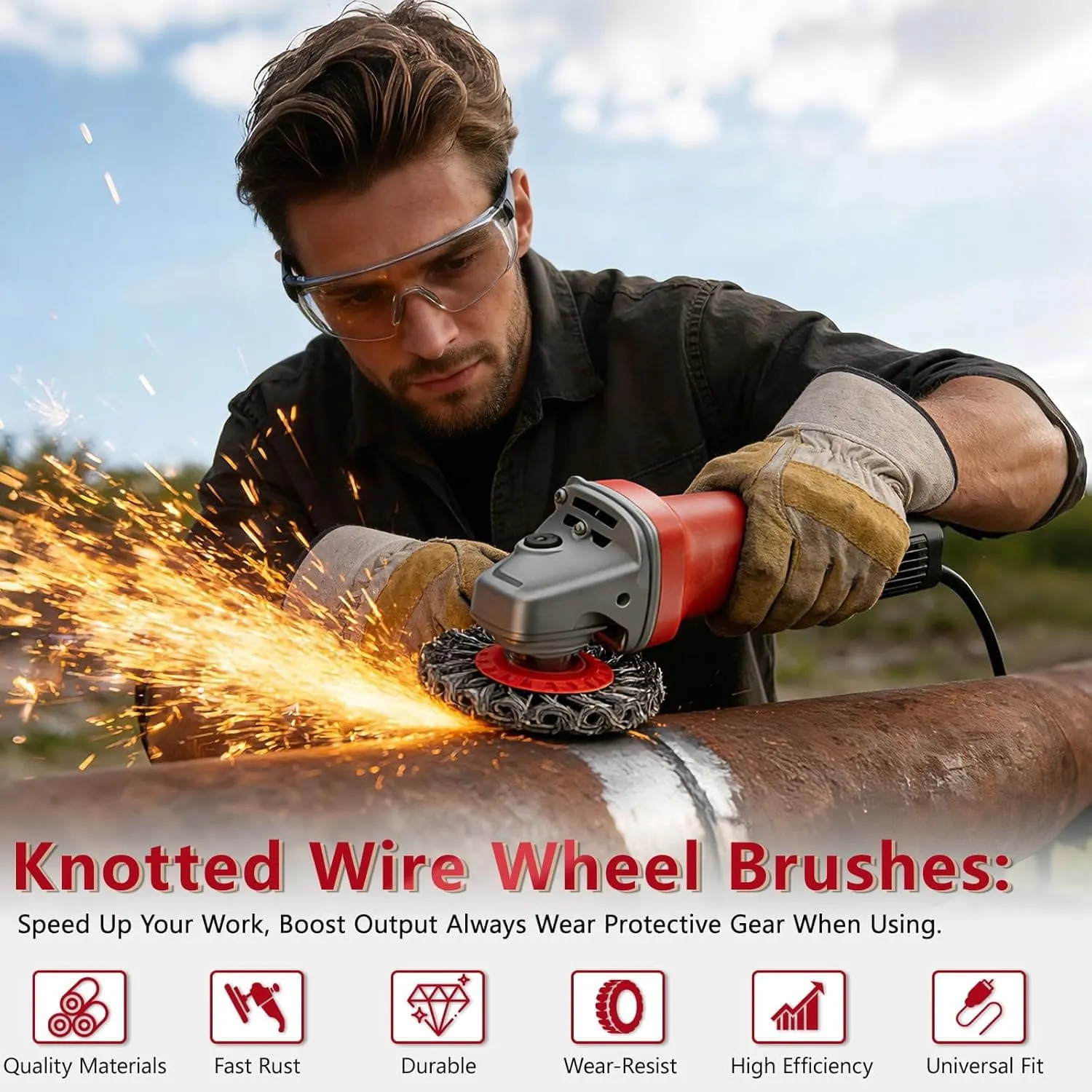
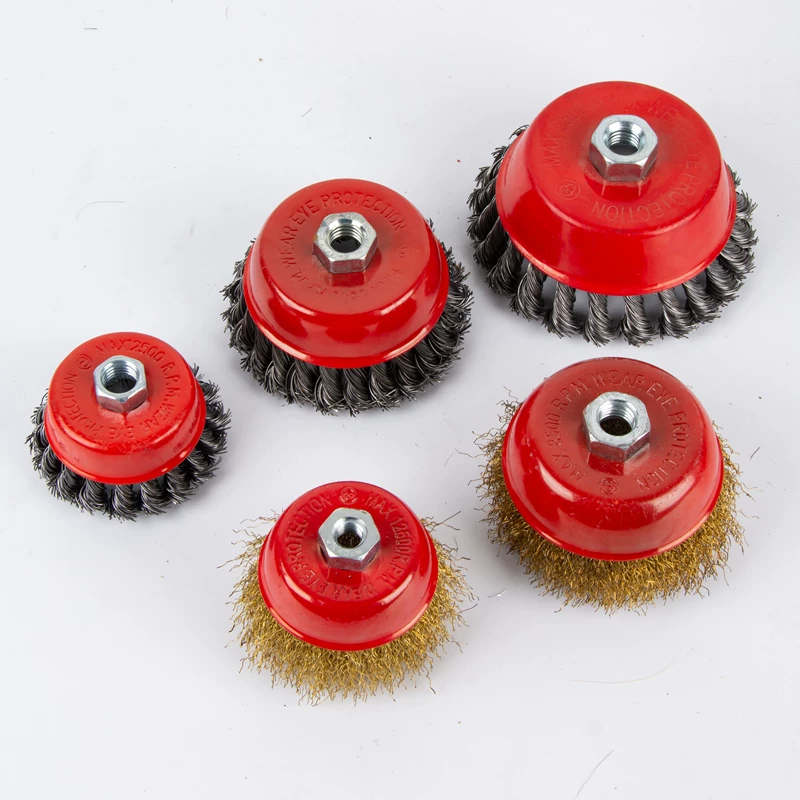



The core difference between wire cup brush and wire wheel brush lies in their appearance structure, contact method, and most suitable working surfaces.
1. Quick Comparison: Wire Cup Brush vs Wire Wheel Brush at a Glance
To help procurement staff and workshop technicians make fast decisions, the following table summarizes the key differences across multiple dimensions:
| Comparison Dimension | Wire Cup Brush | Wire Wheel Brush |
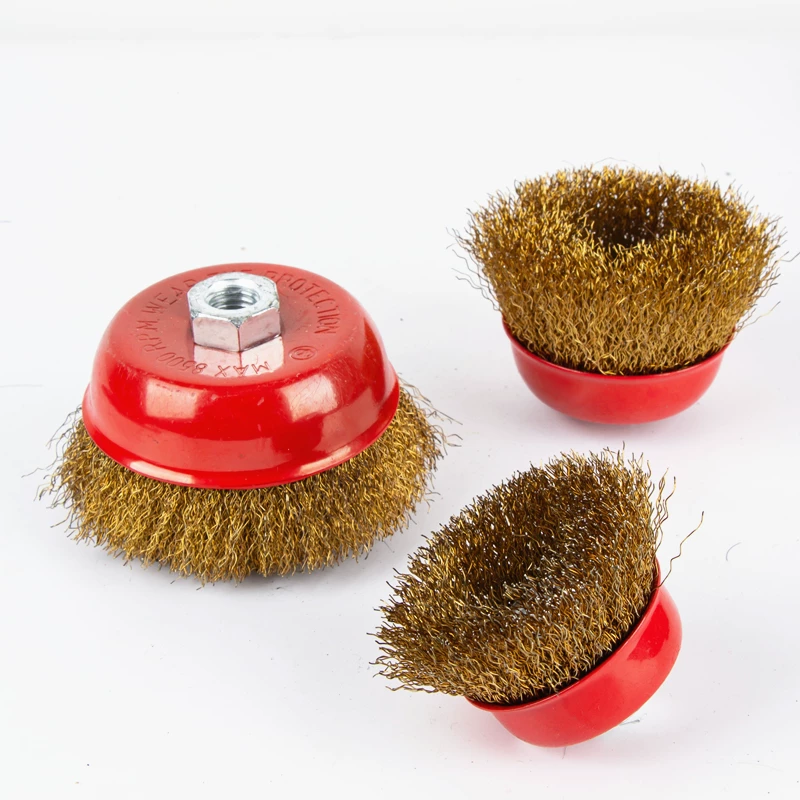
| Appearance Structure | Cup-shaped, bristles point toward the bottom surface | Disc-shaped / wheel-shaped, bristles radiate outward |
| Working Contact Surface | Surface contact (entire cup face contacts workpiece) | Line / point contact (only outer edge contacts) |
| Best Suitable Surfaces | Wide flat surfaces, large structural parts, broad metal surfaces | Weld seams, V-grooves, narrow gaps, inner corners, irregular edges |
| Typical Applications | Ship hull large-area rust removal, old paint stripping, flat mold cleaning | Weld slag removal, pipe inner wall deburring, thread gap cleaning |
| Cleaning Efficiency | Large coverage per pass, extremely high efficiency for broad surfaces | Strong localized penetration, unmatched detail processing capability |
| Main Compatible Equipment | Handheld angle grinder, electric drill | Angle grinder, bench grinder, vertical grinder, electric drill |

2. Wire Cup Brush: The “Efficiency King” for Large-Scale Cleaning
1. Structure and Working Principle
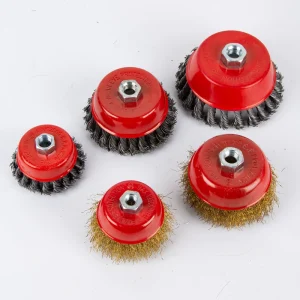
The steel wires of a wire cup brush are vertically mounted inside a cup-shaped metal base. When installed on a high-speed angle grinder, all wire tips simultaneously contact the workpiece surface in a flat manner. This unique “surface contact” working mode maximizes coverage and forward efficiency when processing large, flat surfaces.
2. Core Advantages
- ■High single-pass coverage efficiency: The cup diameter equals the working width, greatly reducing working time in large-area rust removal.
- ■Even pressure distribution: Force is evenly spread across the working surface, reducing deep scratches and providing better substrate protection.
- ■Stable operation posture: Less vibration on flat surfaces, improving operator control and comfort.
3. Best Application Scenarios
- ■Large-area rust removal and marine organism cleaning in shipbuilding and maintenance.
- ■Old paint stripping on large storage tanks, steel structures, and containers.
- ■Surface residue cleaning and finishing of industrial steel plates and flat molds.
Many procurement managers prefer “knotted” wire cup brushes for maximum cleaning speed. However, based on our factory testing, for light paint layers or surface rust, crimped wire cup brushes perform better. Crimped wires provide better flexibility, finer finishing results, lower cost, and longer wear efficiency. Only for heavy weld slag, severe oxidation layers, or extremely stubborn deposits should knotted wire cup brushes be used.
3. Wire Wheel Brush: The “Specialist” for Narrow Gaps and Edges
1. Structure and Working Principle
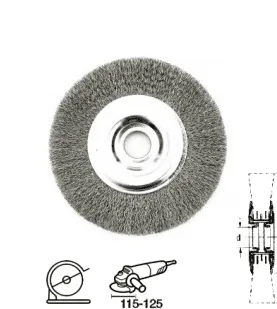
A wire wheel brush has steel wires radiating outward from a central hub, forming a wheel-like structure. During high-speed rotation, only the outermost wire tips contact the workpiece, creating a line or point contact. This concentrates the motor’s power into a very narrow working area, providing strong penetration and localized impact force.
2. Core Advantages
- ■Strong penetration into narrow gaps: Can reach grooves, slots, and tight spaces inaccessible to cup brushes.
- ■High-precision targeted operation: Allows precise cleaning without damaging surrounding finished surfaces.
- ■Excellent edge processing ability: Stable cutting path for burr removal on castings and machined edges.
3. Best Application Scenarios
- ■Pipe welding operations: bevels and inner weld seam cleaning.
- ■Deburring of precision parts, gear roots, and keyways after machining.
- ■Rust removal in internal corners of steel sections (I-beams, channel steel, angle steel).
- ■Cleaning rust and debris inside threads and fasteners.

4. Procurement Selection Guide: How to Choose Between Wire Cup Brush and Wire Wheel Brush
For large-scale B2B procurement or workshop allocation, incorrect selection can reduce efficiency and damage workpiece surfaces. Use the following three-step logic:
Step 1: Evaluate Workpiece Geometry (Cup vs Wheel Decision)
- ■Choose Wire Cup Brush: If the workpiece is a wide, flat, continuous surface. (Cup brush provides full-surface contact and much higher efficiency on flat areas).
- ■Choose Wire Wheel Brush: If the workpiece includes welds, grooves, internal corners, narrow gaps, pipes, or edges. (Wheel brush can penetrate complex geometries effectively).
Step 2: Evaluate Process Intensity & Surface Requirements (Crimped vs Knotted Wire)
Once brush shape is selected, wire type must be determined:
- ■Crimped Wire: Slightly wavy steel wire with good flexibility. Suitable for light-to-medium cleaning, deburring, polishing, and applications requiring surface finish quality.
- ■Knotted Wire: Multiple wires twisted like a rope, extremely rigid. Designed for heavy-duty applications such as thick rust layers, marine growth, and stubborn weld slag.
Step 3: Evaluate Material Compatibility (Avoid Cross-Contamination)
- ■Carbon Steel Workpieces: Carbon steel wire brushes (most economical, general-purpose).
- ■Stainless Steel Workpieces: Must use stainless steel wire brushes.
Using carbon steel brushes on stainless steel may cause cross-contamination. Embedded carbon particles can lead to rusting in humid environments, damaging product quality.
- ■Copper / Aluminum / Explosion-Proof Environments: Brass wire brushes. Brass is softer, reduces surface damage, and produces no sparks, suitable for flammable environments.
Step 4: Verify Equipment Maximum RPM (Safety Check)
Before placing orders, confirm the maximum RPM of grinders or machines. The operating speed must NEVER exceed the maximum RPM marked on the brush. Exceeding RPM limits may cause wire breakage due to centrifugal force, leading to serious safety hazards.

5. Frequently Asked Questions (FAQ)
Industrial Quality & Safety Compliance
In terms of manufacturing and quality certification, all of our wire brushes strictly comply with multiple international standards and regulations, including:
- ISO 9001:2015 — Quality management system certification, ensuring stable production and batch-to-batch consistency.
- ISO 1940-1 / ISO 21940 — Balancing quality standards to reduce vibration risks during high-speed rotation.
- EN 1083-2 — Safety standard for power-driven wire brushes (European machinery safety regulation).
- ANSI B165.1 — American industry safety standard for power-driven wire brushes.
- REACH / RoHS Compliance — Compliance with EU environmental protection and hazardous substance restriction requirements.
- ISO 14001 — Environmental management system certification.
All wire brushes are manufactured under strict quality control systems to ensure stability, safety, and consistent performance in industrial applications.
One-Stop Wire Brush Customization & Procurement Solutions
As a professional abrasives and abrasive tools supplier, we understand that different industries require different solutions. In addition to standard products, we offer full customization services:
Wire diameter, brush diameter, bore size, and international mounting standards (e.g., M14, 5/8″-11).
Factory-direct pricing with stable supply chain support and OEM customization options.
Full QC system, technical specifications, sampling tests, and factory audit checklists.
Feel free to contact our sales manager anytime. We will provide a dedicated quotation and a one-stop industrial surface treatment solution within 24 hours!




 English