



To determine a high-quality Wire Wheel Brush (steel wire wheel brush), the key lies in five critical technical dimensions: steel wire material and tensile strength, filament structure engineering, dynamic balance control, wire anchoring technology, and international safety compliance certification. High-quality products not only significantly improve surface treatment efficiency but also reduce equipment wear, minimize wire breakage and flying-wire risks, and achieve lower total lifecycle costs.
For B2B procurement managers and engineers in industrial surface treatment, weld cleaning, metal deburring, or rust removal, selecting a high-quality steel wire wheel brush is not only about efficiency, but directly affects production line downtime costs and operator safety. Low-quality wire wheel brushes are highly prone to wire breakage and imbalance during high-speed rotation, which can lead to serious safety accidents and reduce workpiece quality.
This article provides a systematic breakdown from a professional factory manufacturing and engineering application perspective, deeply explaining how to systematically evaluate and procure steel wire wheel brushes that meet international standards.
1. What is a Wire Wheel Brush? Full Industrial Application Overview
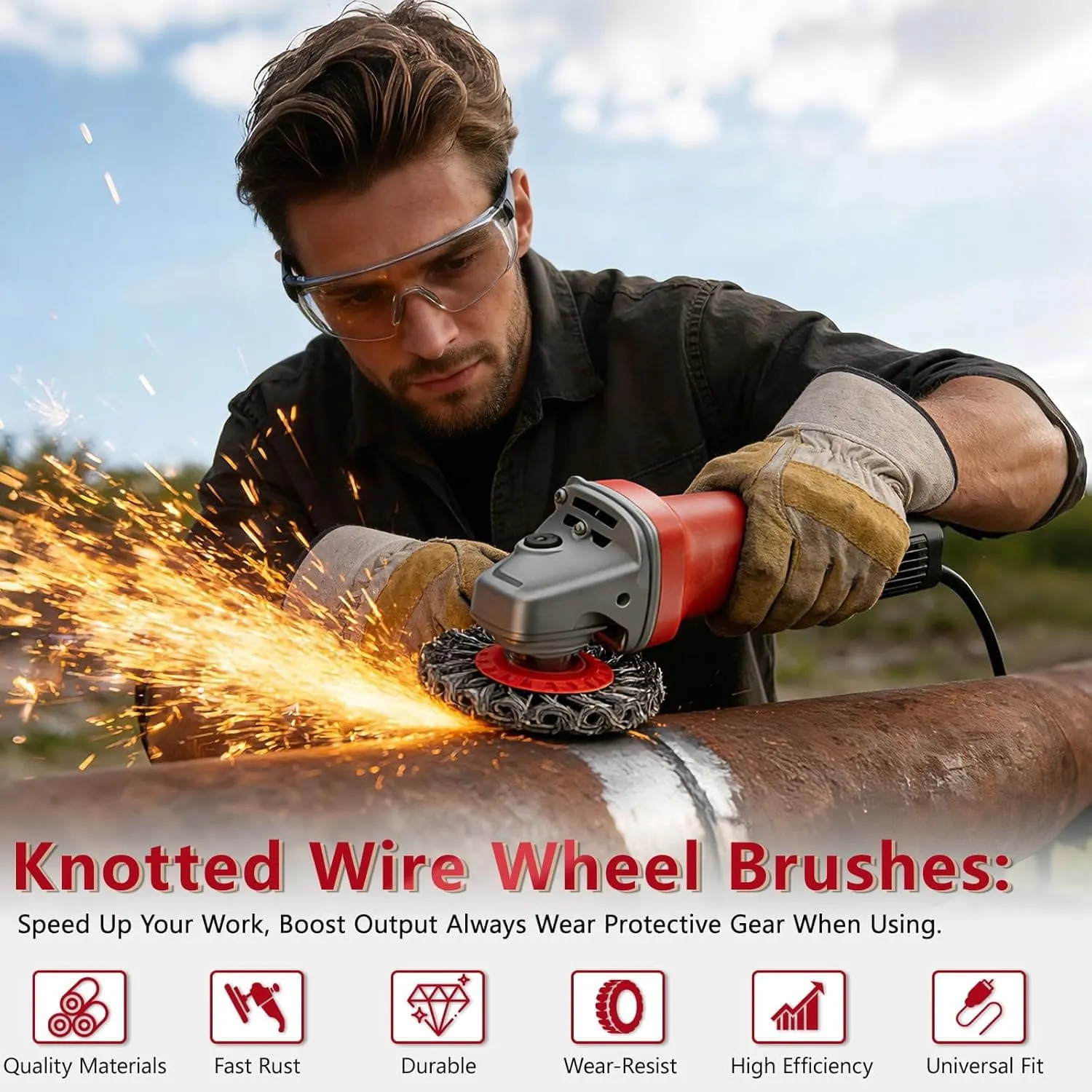
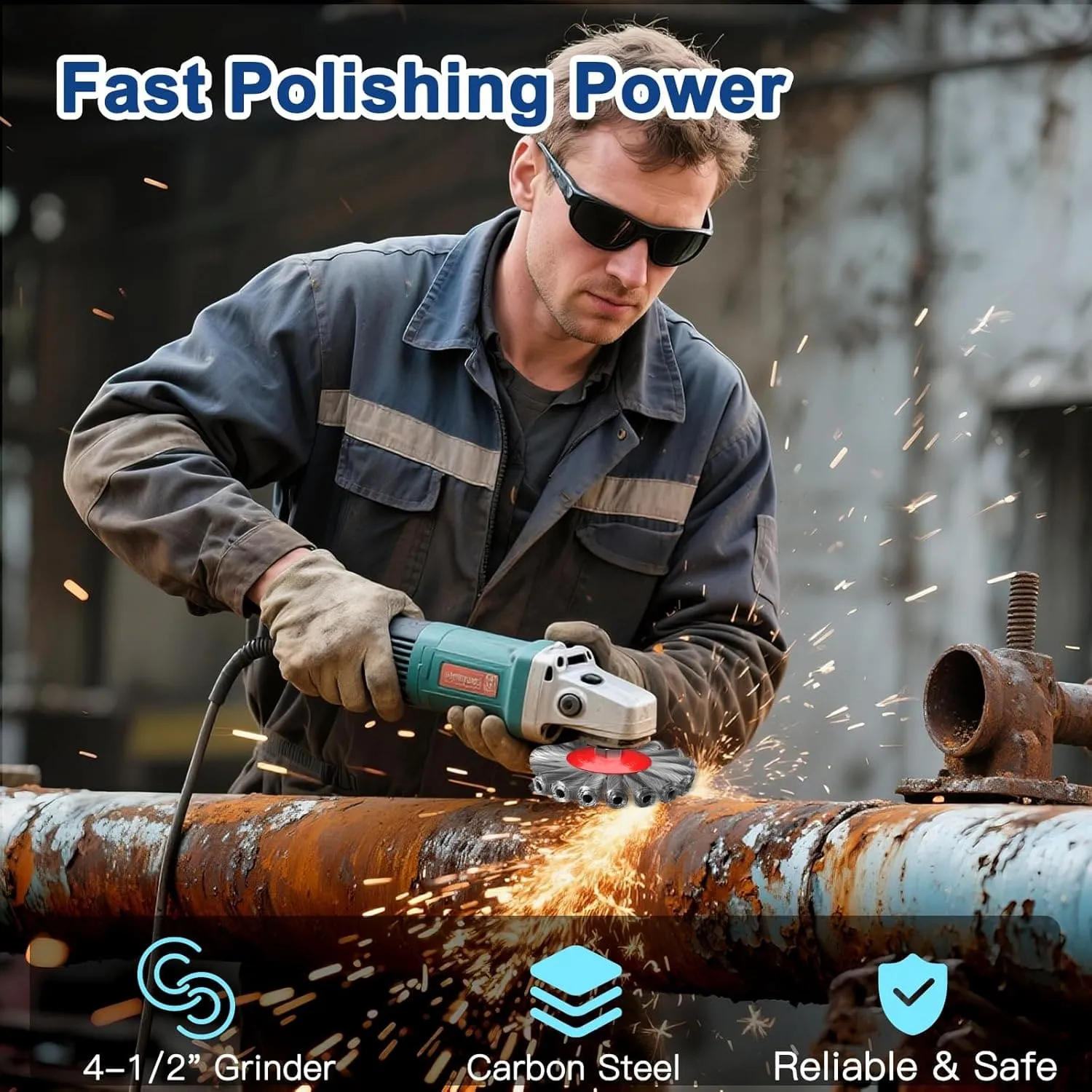
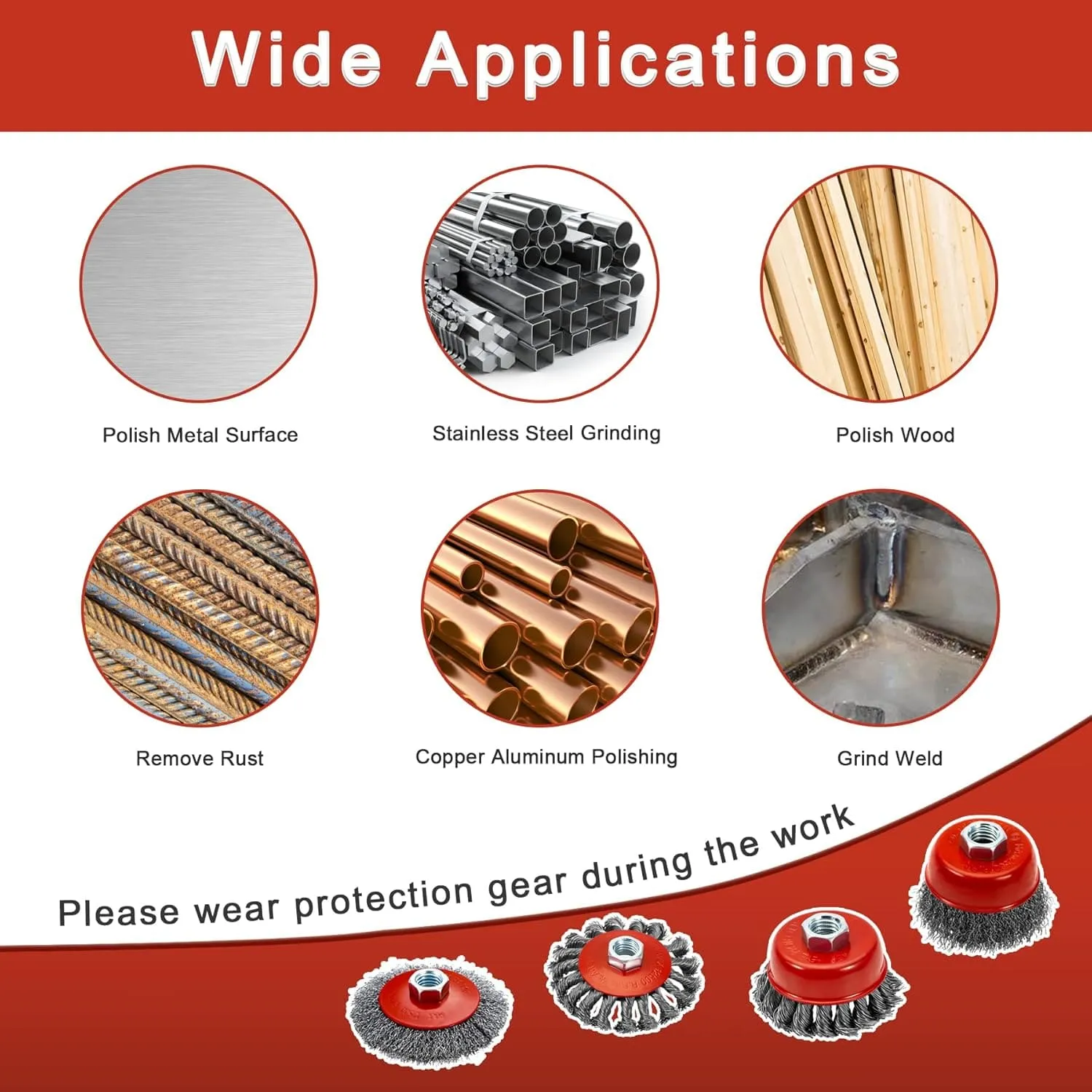
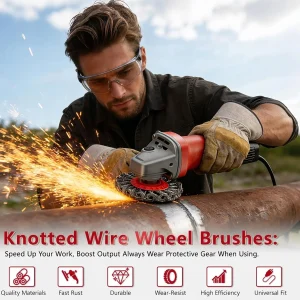
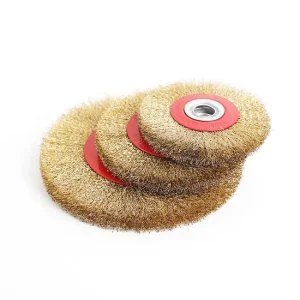
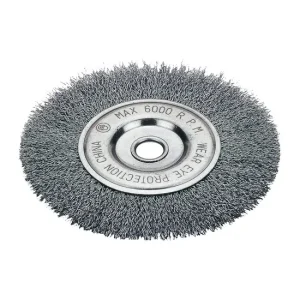
A Wire Wheel Brush (steel wire wheel brush) is a rotary metal brush installed on angle grinders, bench grinders, electric drills, or industrial automation equipment. Through high-speed rotation, centrifugal force causes steel wires to continuously impact the workpiece surface, thereby achieving:
- Rust Removal: Removing oxide layers from iron and steel structures
- Weld Cleaning: Cleaning welding spatter and oxide scale from weld seams
- Deburring: Processing sharp edges and burrs of machined parts
- Antique Wood Brushing (Wood Texturing): Removing soft wood grain to highlight texture
- Surface Finishing (Wood Finishing): Removing wood surface fuzz and polishing before staining
- Surface Roughening (Surface Preparation): Providing required surface roughness before coating or painting
In B2B industrial applications, it covers industries including metal manufacturing (weld cleaning, cutting edge treatment), shipbuilding (heavy corrosion removal), steel structure engineering (pre-paint surface preparation), petrochemical industry (pipeline anti-corrosion preparation), automotive manufacturing (oxide layer removal), and woodworking furniture (wood antique brushing, surface cleaning, and pre-staining polishing).
Click to read more:Wire Wheel Brush: A Complete Guide to Types, Materials, Applications, Selection, and Safe Use
2. How to Determine High-Quality Wire Wheel Brush? Five Core Technical Standards
Judging the quality of a wire wheel brush cannot rely only on visual inspection. Procurement teams must evaluate it from five dimensions: material, structure, dynamic balance, anchoring process, and safety certification.
2.1 Steel Wire Material: Precise Matching Determines Service Life
Steel wire is the “working body” of the product, and its physical performance determines whether it breaks easily, wears out quickly, or remains stable. Different materials must strictly match different substrates:
Swipe right for details
| Material Type | Application Scenario | Core Technical Advantages |
|---|---|---|
| Carbon Steel | Iron parts, carbon steel structures, heavy rust surfaces, weld cleaning | High-tensile oil-quenched carbon steel wire, high strength, not easy to break under heavy load |
| Stainless Steel | Stainless steel, aluminum alloys, non-ferrous metals, medical and food-grade equipment | Usually 304/316 grade, completely prevents iron contamination and avoids secondary rust or electrochemical corrosion |
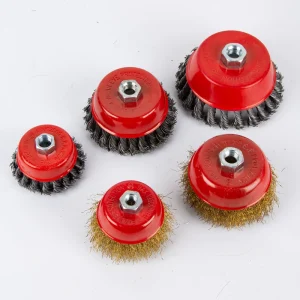
| Brass | Sensitive molds, copper parts, oil & gas / chemical hazardous environments | Non-sparking material, soft texture, suitable for fine polishing without damaging base material |
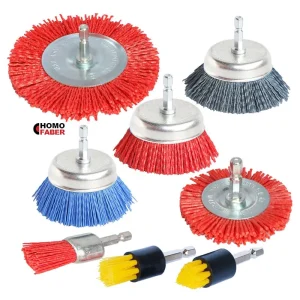
| Abrasive Nylon | CNC automated deburring, complex shaped parts, precision components, wet processing | Contains silicon carbide (SiC) or aluminum oxide (AO), flexible abrasive grinding capability |
Industry reference tensile strength standard:
Swipe right for details
| Grade | Tensile Strength | Performance |
|---|---|---|
| Low-end | 1500–1700 MPa | Easy breakage, short lifespan, high flying-wire risk |
| Mid-range | ≥1800 MPa | Basic usability |
| Industrial grade | ≥2000 MPa | High wear resistance, high stability, 2–3× longer lifespan |
In high-speed rotation environments of 8000–12000 RPM, low-strength steel wires are prone to fatigue fracture and flying-wire risks. High-strength steel ensures structural stability and significantly extends service life.
Procurement recommendation: Always request Material Certificates and tensile strength test reports, and confirm compliance with EN / ASTM standards.
⚠️ Failure case warning: If carbon steel brushes are mistakenly used on stainless steel workpieces, microscopic carbon particles may embed into the surface, causing localized electrochemical corrosion (rusting) in humid environments. Material matching is the first critical step.
2.2 Filament Structure: Knot Twist vs Crimped Wire
The arrangement and processing method of steel wires directly determines aggressiveness and flexibility:
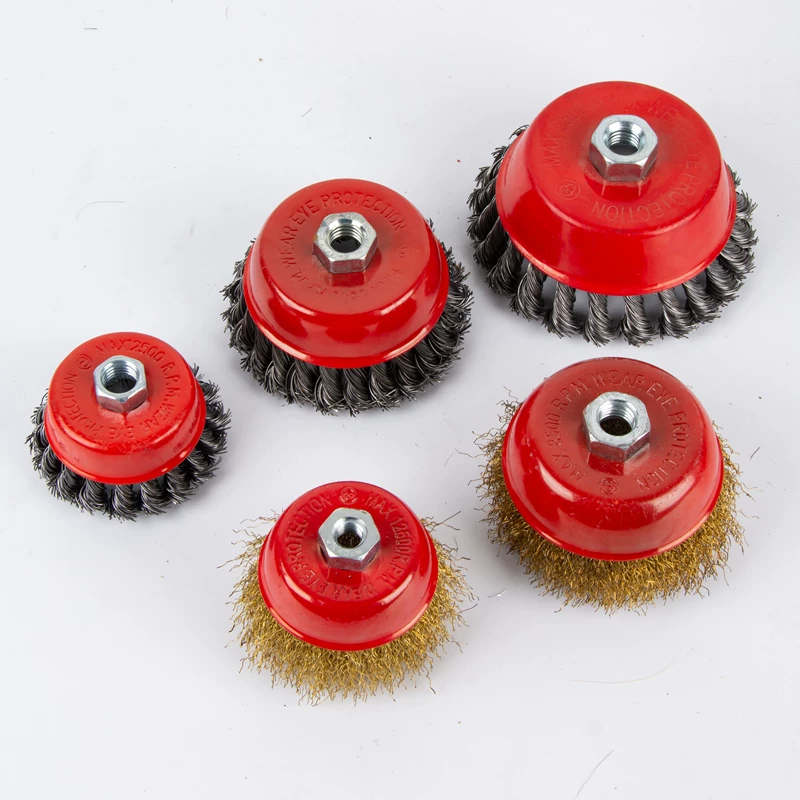
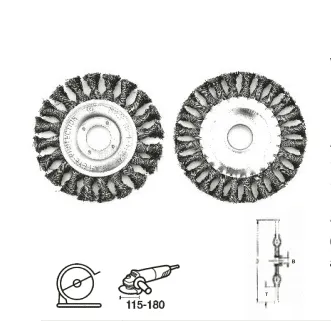
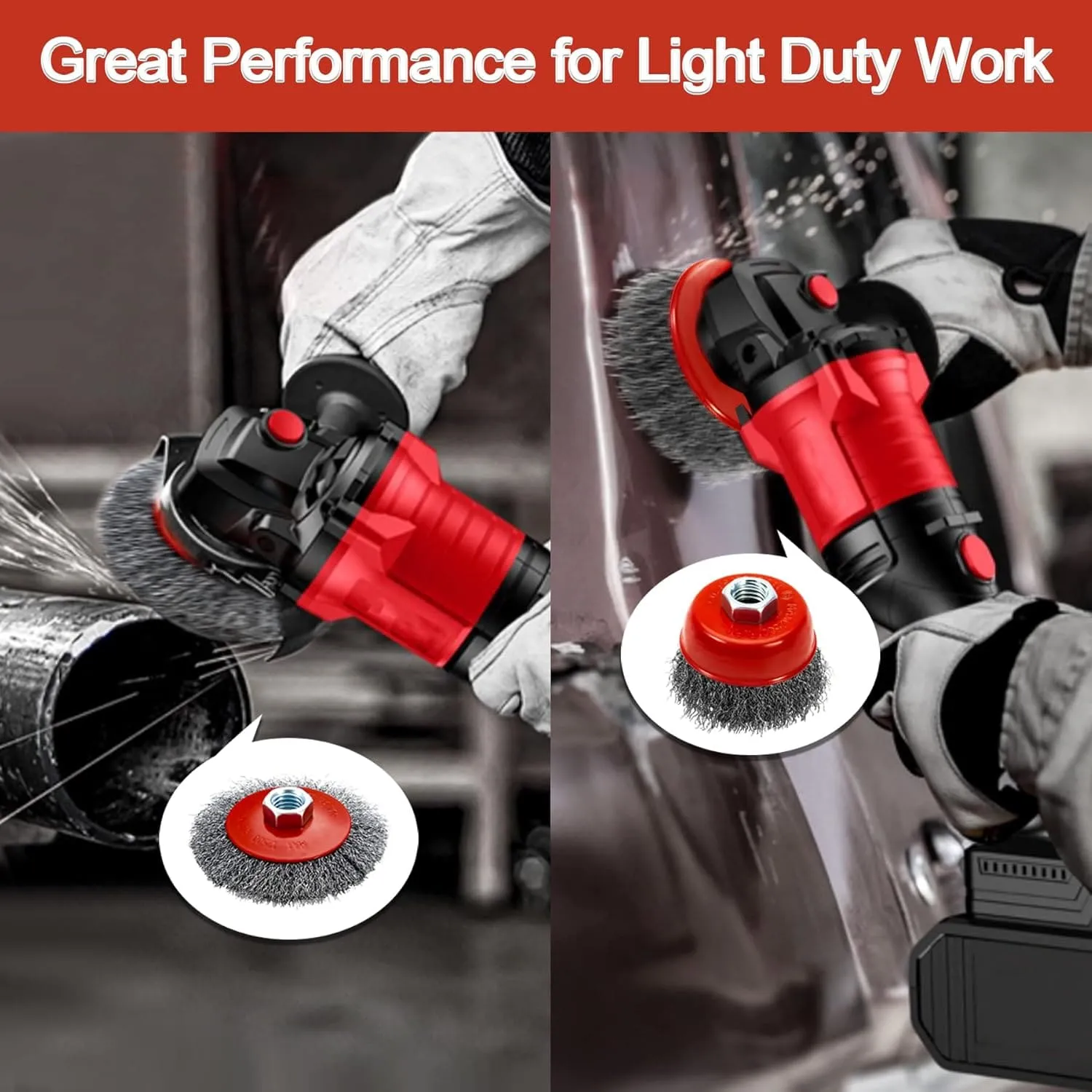
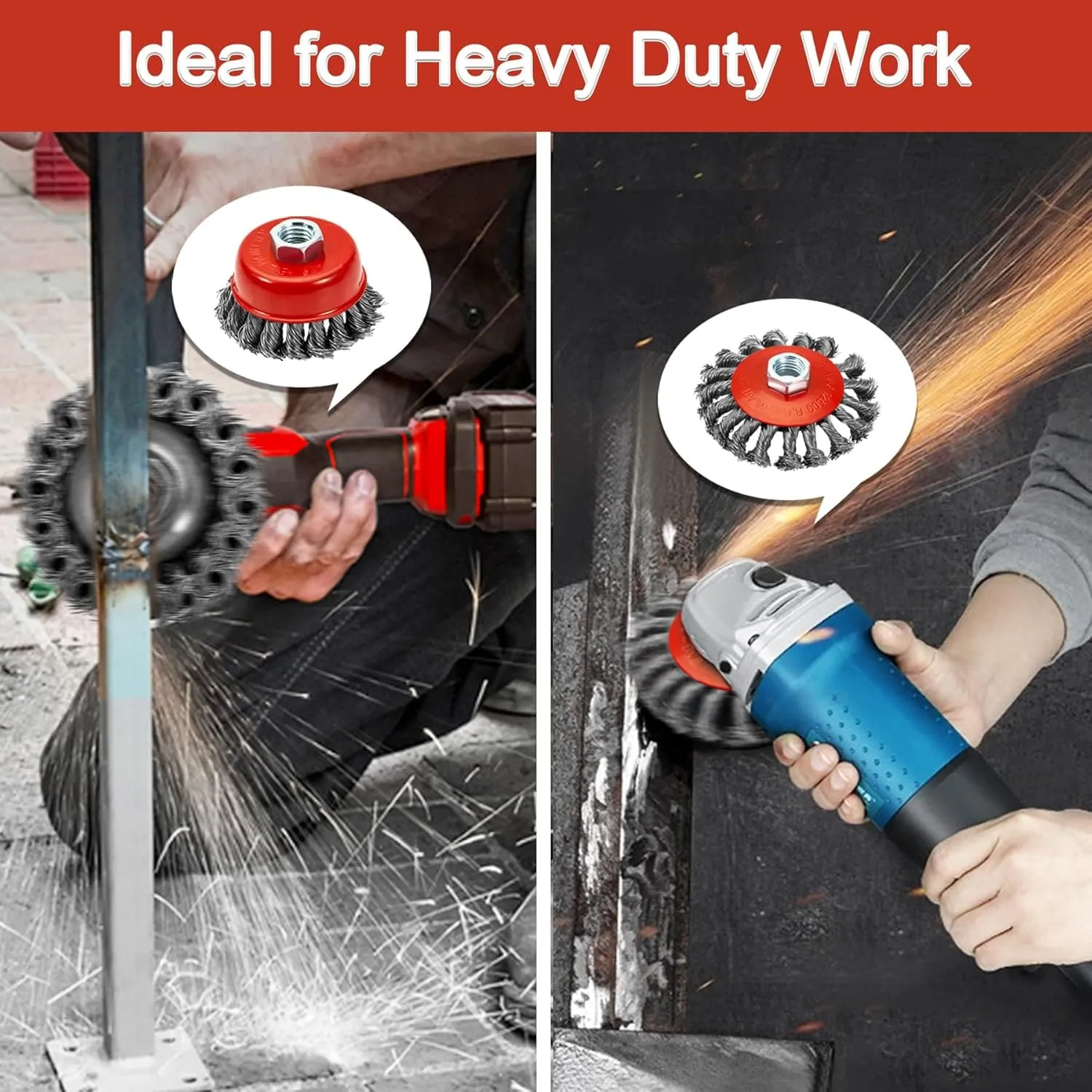
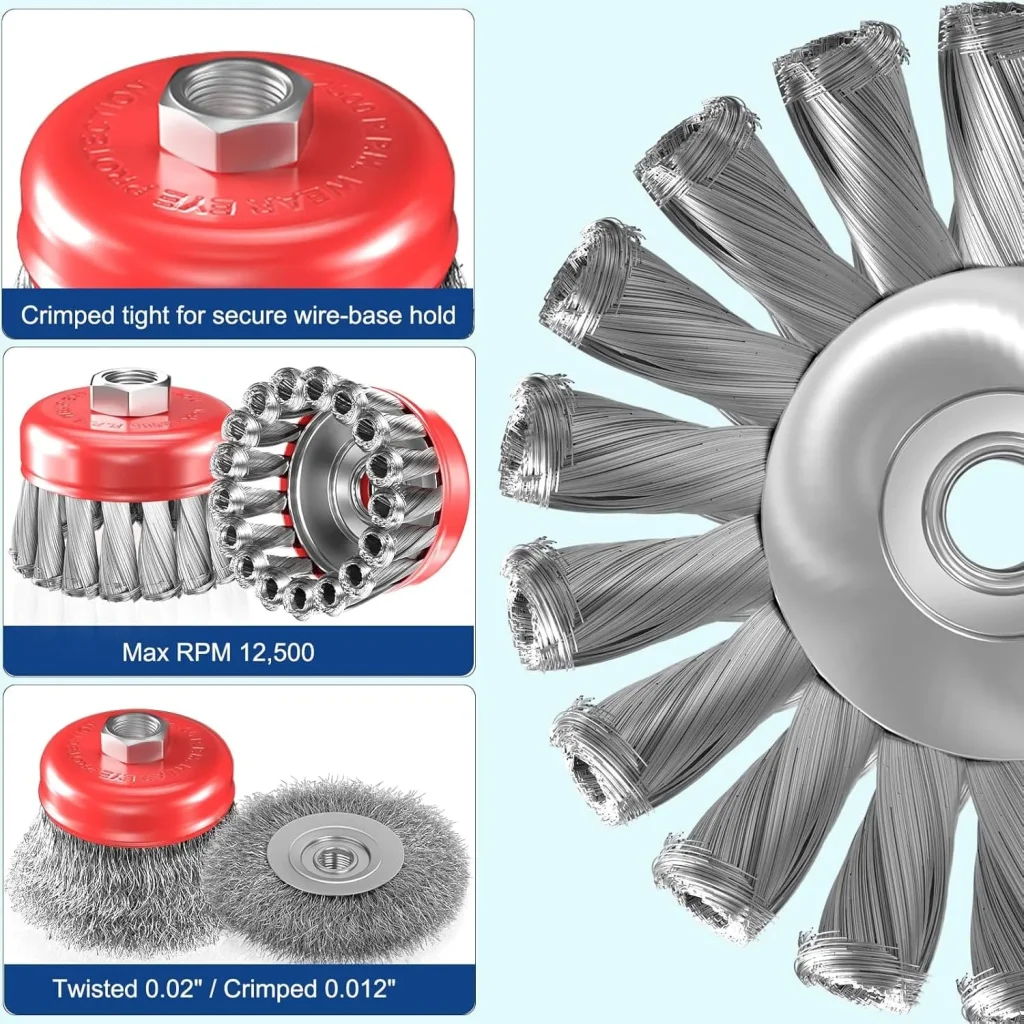
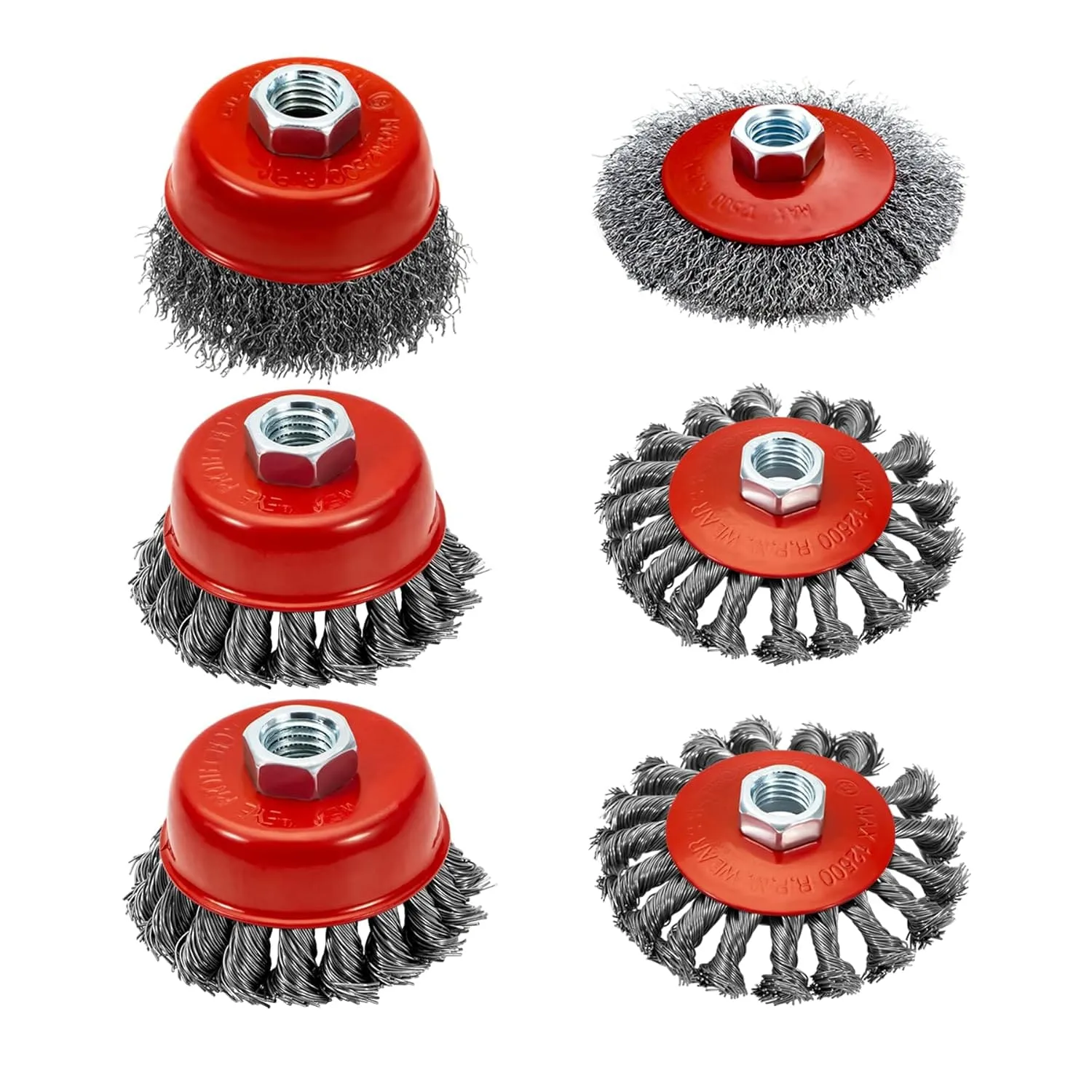
- Knot Twist (Twisted Wire): Multiple steel wires twisted into strands. Offers high rigidity and strong impact force. Used for heavy rust removal and weld cleaning. High requirement: uniform torque; uneven twisting may cause “wire explosion” under centrifugal force above 10,000 RPM.
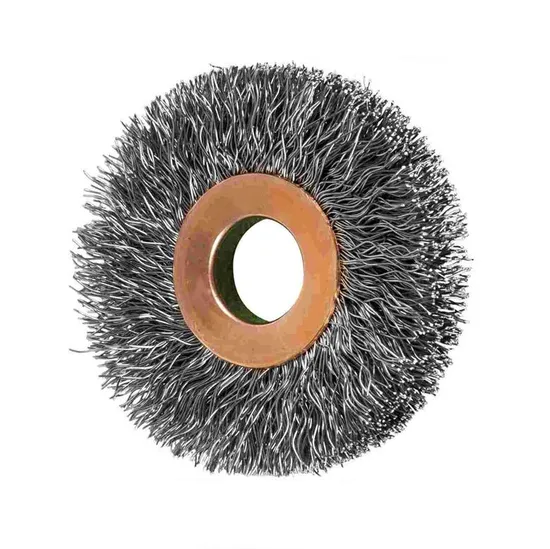
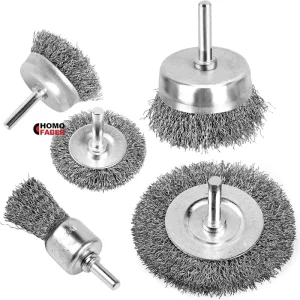
- Crimped Wire: Wavy single-wire structure. More flexible, more uniform contact. Used for fine finishing and irregular surface treatment. High requirement: uniform density and spacing to prevent stress concentration and breakage.
Low-quality issues include uneven brushing, loose twisting, disintegration during use, and vibration caused by uneven density.
2.3 Dynamic Balancing: Critical Safety Parameter for High-Speed Rotation
Dynamic balance is one of the most important indicators of professional-grade wire wheel brushes and a key factor distinguishing industrial products from low-end suppliers.
At high speed, uneven mass distribution generates eccentric force, causing vibration, accelerating bearing wear, and in severe cases causing product ejection accidents.
High-quality requirements:
- No noticeable vibration at 8000–12000 RPM
- Individually calibrated electronic dynamic balancing before leaving factory
- Center of gravity is evenly distributed
-
Manufactured and verified under ISO 1940-1 / ISO 21940 dynamic balancing standards, with vibration coefficients controlled within top international levels.
Consequences of missing dynamic balance:
- Noticeable vibration causing operator fatigue
- Rapid damage to angle grinder or bench grinder bearings
- Surface defects (vibration marks) on workpieces
- Severe safety risk due to product ejection
2.4 Wire Fixing Process: Hub & Anchor Technology Determines Safety and Lifespan
How steel wires are fixed to the base determines the upper limit of product safety.
High-quality structure includes:
- Thickened solid center plates: Heavy-duty steel plates prevent wire loosening at high speed
- Internal anchor pins: Wire loops tightly wrapped around internal steel rods or retaining rings
- Multi-point compression + welding reinforcement structure
Low-end issues:
- Adhesive or simple cold pressing leads to wire shedding over time
- Insufficient clamping force causes entire wire bundles to detach
- Brush body deformation reduces efficiency
Production test data: Dual-loop internal locking system reduces wire shedding rate by 42% under continuous 12,000 RPM overload testing, significantly extending service life and improving safety.
2.5 International Safety and Compliance Certification
High-standard global procurement requires:
- ANSI B165.1: US national safety standard for power-driven brush tools
- EN 1083-2: European safety standard for power brushes
- ISO 9001:2015: Quality management system certification ensuring batch-to-batch consistency
3. Procurement Pitfall Guide: How to Quickly Identify Low-Quality Brushes
- ❌Abnormally low price: Usually indicates low-grade steel or heavily simplified manufacturing process, resulting in short lifespan and safety risks.
- ❌No material or testing data: No traceability, quality cannot be verified.
- ❌No brand or factory information: Likely trading company or small workshop production.
- ❌Poor appearance quality: Uneven wire thickness, inconsistent twisting, and irregular edges indicate unstable manufacturing.
- ❌Loose hand feel: If the brush feels loose when touched, it indicates serious structural defects.
4. Case Study: From Metal Contamination to Perfect Wood Grain – Antique Furniture Factory Selection Failure
In a high-end antique wooden furniture factory export project, the procurement team purchased low-cost carbon steel wire wheel brushes for wood brushing to enhance grain texture. However, after production started, critical problems occurred:
High-speed carbon steel wires were too hard and directly cut wood fibers, resulting in rough and uneven surfaces. Worse, carbon steel friction left microscopic iron particles on the wood surface. Within 24 hours, these particles reacted under humidity conditions, causing black metal contamination (Metal Smudging), destroying batches of high-value wood materials.
After our intervention, we recommended switching to abrasive nylon wheel brushes (Abrasive Nylon Wheel Brush). These brushes embed silicon carbide abrasives into nylon filaments, allowing precise antique wood grain creation while completely eliminating iron contamination.
After replacement:
- Defect rate reduced to zero
- Processing efficiency improved by 40%
- Tens of thousands in coating and staining losses were avoided
This demonstrates that in B2B procurement, especially in woodworking applications, material selection must be precise. Blindly choosing low-cost universal steel wire brushes leads to far higher hidden costs.
5. Our Wire Wheel Brush Solutions
As a professional manufacturer with 20+ years of experience in industrial brush production, we provide customized solutions focused on high safety, long wear life, and surface consistency.
5.1 Full Material Product Portfolio
- High-quality carbon steel series: high-tensile oil-quenched steel wire for heavy-duty industrial rust removal
- Aerospace & food-grade stainless steel series: 304/316 stainless long wire with full demagnetization for chemical and food equipment
- High-purity brass series: non-sparking certified products for hazardous environments
- Abrasive nylon series: full grit range from 60 mesh (coarse) to 500+ mesh (fine polishing) for CNC automation
5.2 Strict Quality Control System
- Destructive overspeed testing: 1.5× rated RPM rotation test
- 100% electronic dynamic balancing calibration: vibration controlled within top industrial standards
- Full traceability system: raw material furnace number, processing batch, and production tracking barcode
5.3 B2B Supply Chain Support
- High customization capability (diameter, width, wire diameter, bore type, threaded interfaces such as M14×2, 5/8″-11 TPI, etc.)
- CNC and robotic automation compatibility
- Stable lead time and flexible MOQ
- 72-hour fast shipping for framework partners
6. How to Choose a Reliable Supplier? 5 Key Decision Model
Swipe right for details
| # | Question | Purpose |
|---|---|---|
| 1 | Do they provide material test reports? | Verify traceability |
| 2 | Do they have in-house production lines? | Confirm manufacturing capability |
| 3 | Do they support OEM/ODM customization? | Evaluate flexibility |
| 4 | Do they have industry case studies? | Validate real-world performance |
| 5 | Do they support sample testing? | Confirm product confidence |
7. Standard Procurement Process (6-Step Guide)
- Define application scenario: Weld cleaning / rust removal / deburring / polishing + material type + machine interface
- Determine product type: Twisted or crimped wire + material type + wire diameter
- Supplier screening: Use 5-question evaluation model
- Sample testing: Perform real operation and lifespan evaluation
- Small batch trial order: Validate consistency and delivery performance
- Long-term agreement: Lock pricing and supply stability
8. FAQ
9.Conclusion: Key Recommendation for Procurement Decision Makers
High-quality wire wheel brushes improve efficiency, reduce equipment wear, minimize safety risks, and lower long-term total cost.
Swipe right for details
| Evaluation Dimension | Low-End Product | High-Quality Product |
|---|---|---|
| Steel tensile strength | 1500–1700 MPa | ≥2000 MPa |
| Dynamic balance | No control, vibration | 100% calibrated |
| Anchoring system | Glue/cold press | Mechanical locking |
| Certification | None | ANSI / EN / ISO |
| Unit cost | Low | Higher |
| Lifespan | Short | 2–3× longer |
| Total cost | High (hidden cost) | Lower overall |
True professional B2B procurement is not about buying the cheapest brush, but selecting a system-level solution that makes the entire production line safer, more stable, and more efficient.
10.Optimizing Supply Chain Efficiency: Start by Choosing High-Quality Wire Wheel Brushes
In every critical surface treatment process of industrial manufacturing, the tool you choose is more than just a consumable—it is your first line of defense ensuring production efficiency and operational safety.
Now, it is time to audit and optimize your consumable supply chain.
If you are looking for a professional Wire Wheel Brush solution that can significantly reduce downtime risks, extend tool service life, and ensure consistent machining quality, please do not hesitate to reach out. We cordially invite you to contact our engineering team to share your workpiece materials, processing equipment, and current pain points.
Whether it involves batch replacement of standard parts or customized solutions for automated assembly lines, we provide comprehensive support ranging from technical selection advice and tensile strength test data to customized samples.
Start a partnership with us today, and let every machine achieve peak efficiency and robust performance during high-speed operation.
High-quality industrial tools not only make work easier and more efficient but also save you from profit margins swallowed by hidden costs.
11. Reference
-
American National Standards Institute (ANSI). ANSI B165.1. Safety requirements for the use of power-driven brushing tools.
-
European Committee for Standardization (CEN). EN 1083-2:2024. Power-driven brushes — Part 2: Safety requirements.
-
International Organization for Standardization (ISO). ISO 9001:2015. Quality management systems — Requirements.
-
International Organization for Standardization (ISO). ISO 1940-1 / ISO 21940. Mechanical vibration — Balance quality requirements and verification of rotors (with vibration coefficients controlled within top international levels).




 English