




1. Why Wire Brush Cleanliness Directly Impacts Your Bottom Line
When managing high-volume metal fabrication, surface preparation, or rust removal production lines, wire brushes are often labeled as “simple consumables.” However, as a founder with 20 years of manufacturing and R&D experience in China’s abrasives supply chain industry, I have personally witnessed thousands of processing plants burn through their procurement budgets simply because they ignored a fundamental thermodynamic and mechanical fact: a contaminated wire brush is a failing wire brush.
Mechanisms of Wire Brush Contamination
The contamination of a wire brush is fundamentally defined as follows: debris generated during high-speed friction and external contaminants are captured by the wire structure, gradually setting and bonding under pressure and heat to form persistent residue and cross-contamination. The sources and severity of contamination vary slightly across different wire materials:
Carbon Steel Wire Brushes: During high-intensity cutting, these brushes easily generate large amounts of metal grinding dust while being prone to oxidation and rusting themselves. This creates a mixed contamination of “metal debris + rust + workpiece residue.” These particles are easily embedded deep into the wire roots and twist-knot structures, solidifying further under humid or high-temperature conditions.
Stainless Steel Wire Brushes: Although resistant to rust, they still produce metallic microparticles under high-speed friction. Due to their aggressive scraping ability on workpiece materials, they easily drag different metal powders into the gaps between the wires, forming stubborn cross-contamination residues.
Brass Wire Brushes: Being a softer material, their wear is primarily self-sacrificial. They exert lighter cutting action on workpieces and produce fewer hard metal chips. However, they can still adsorb oil stains and oxidized dust, resulting primarily in surface-adherent contamination.
Pure Copper Wire Brushes: Similar to brass, pure copper is a low-hardness material. Contamination is dominated by the adsorption of external media, making it less prone to deep embedding or sintered residues. Nevertheless, fine particles and oil sludge still accumulate during long-term use.
Nylon Brushes: These do not generate metallic cutting debris. Contamination comes mainly from external oil stains, dust, or chemical residues. Relying on flexible sweeping action, they are free from the problems of high-temperature metal particle embedding and sintering. Consequently, their overall level of contamination is the lowest and the easiest to clean.
In general, the severity of wire brush contamination ranks as follows:
The Cost of Neglecting Cleanliness
Premature Wire Breakage: Residual metal debris, oil, or molten particles trapped within the wire filaments gradually harden, restricting the natural bending and rebound of the wires. When the wires cannot flex freely, stress concentrates at the root or crimp points. Under high-speed rotational working conditions, this accelerates fatigue crack propagation, ultimately leading to brittle wire breakage or even shedding of entire sections.
Cross-Contamination of Workpieces: Wire brushes containing carbon steel residues, old coatings, or oxidized powders will directly transfer these contaminants to the surfaces of high-value workpieces (such as stainless steel or aluminum alloys) during subsequent use. This triggers electrochemical corrosion, surface blackening, or a drop in coating adhesion, which can cause the scrapping of entire batches in severe cases.
Disruption of Equipment Dynamic Balance: For power-driven wire brushes, unevenly distributed residual debris alters the overall mass distribution, destroying the dynamic balance. At high speeds, this generates high-frequency vibrations that not only accelerate wear on bearings and spindles but can also cause erratic equipment shaking, introducing clear safety risks.
More importantly, different materials and configurations of wire brushes exhibit completely different contamination characteristics and cleaning requirements. A “one-size-fits-all wiping or simple blow-off” approach is often inapplicable and may even cause secondary contamination or drive residues deeper.
Based on manufacturing feedback and field operational observations, this guide provides a standardized, actionable set of cleaning and maintenance workflows broken down by material types and brush configurations below.
2. How to Clean Wire Brushes Based on Material: 5 Types Explained Individually
Cleaning methods vary drastically depending on the wire material. Using the wrong method will not only accelerate brush wear but can also introduce contaminants onto the workpiece, leading to coating failure, weld porosity, or even wholesale rework. Below is a detailed breakdown by material, further categorized by brush type.
I. Carbon Steel Wire Brushes (Most Common / Most Prone to Rusting)
Core Principle: Keep completely dry throughout; blow dry immediately after use.
Carbon steel is highly susceptible to rust, particularly at the crimp zones where the wires are bent and secured. This is where stress is most concentrated; once rust sets in, it accelerates wire breakage. The broken wire segments then become hazardous projectiles under high-speed rotation. Therefore, the cleaning logic for carbon steel brushes relies on a single rule: keep them dry.
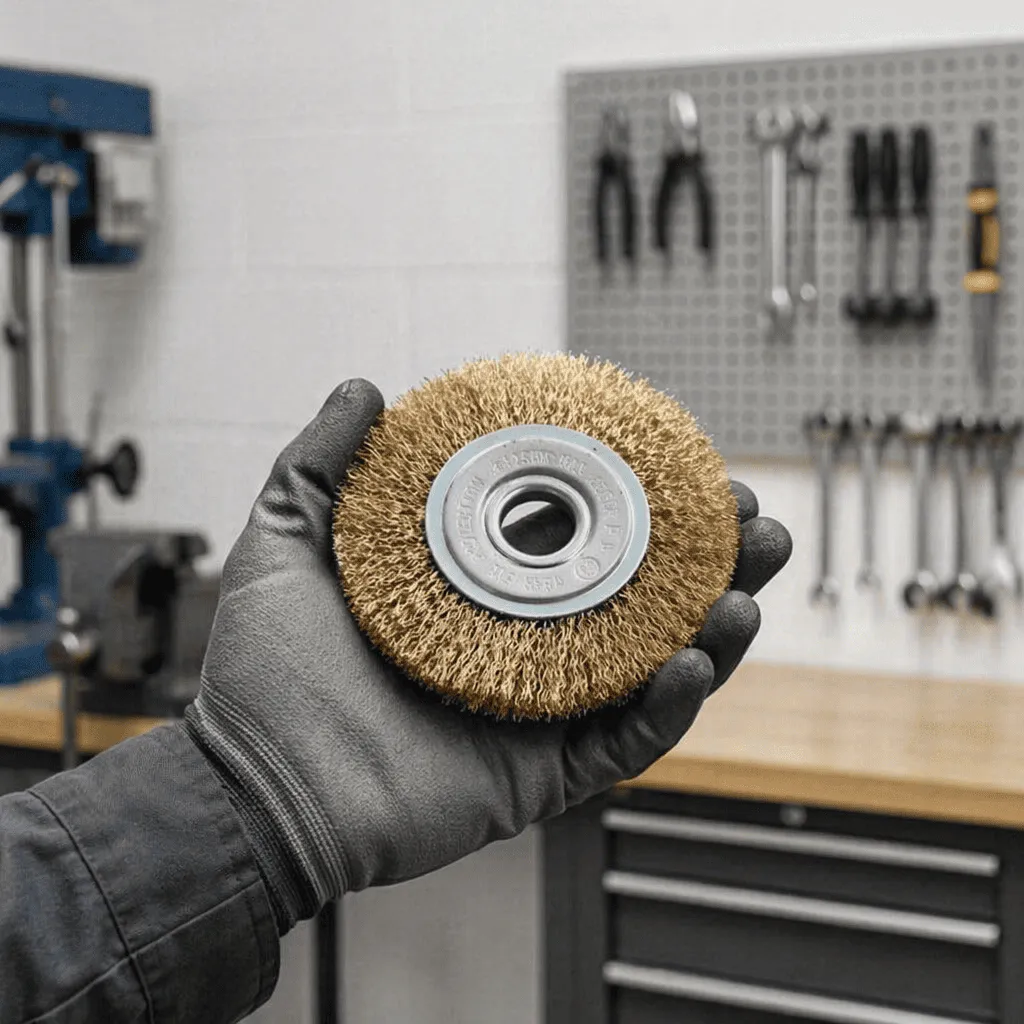
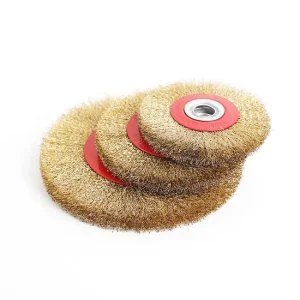
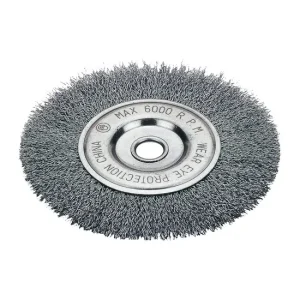
- Wheel Brushes: Use a high-pressure air gun to thoroughly blow out the brush immediately after use, focusing heavily on the arbor hole area and the roots of the wire tufts. Store dry. If they touch water and sit overnight, they will rust.
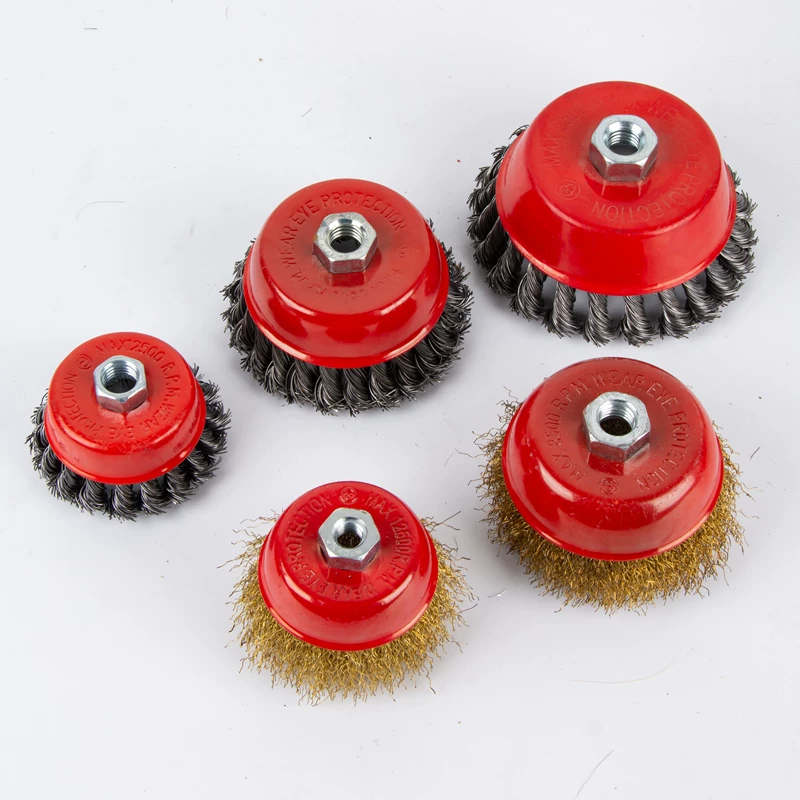
- Cup Brushes: Blow off surface dust, focusing specifically on cleaning the inner cavity of the cup bottom, where metal powder and oil sludge easily collect. After cleaning, apply a very thin layer of rust-preventative oil to the wire tips and place the brush wire-side down to let the oil naturally seep inward.
- Tube/End-Bore Brushes: Use a thin iron rod to scrape out oil sludge along one direction. Do not push and pull back and forth, as a reciprocating motion will push the contaminants deeper. After scraping, blow through both ends with an air gun.
- End Brushes: Direct the air gun from the shank toward the brush face. The roots are prone to debris accumulation; apply a small drop of rust-preventative oil to the roots immediately after blowing.
- Hand Wire Brushes: Comb through the wires along their natural direction using a stiff-toothed cleaning comb, then blow clean with an air gun. Never rub two wire brushes against each other to clean them, as this ruins both.
Special Warning for Pre-Weld or Pre-Coating Prep: If a brush was coated with rust-preventative oil after its last use, the oil must be completely wiped off with a clean cloth before subsequent welding or spraying operations. Otherwise, residual oil transferred to the workpiece will cause weld porosity or coating delamination.
II. Stainless Steel Wire Brushes (Most Vulnerable to Iron Contamination / Exclusive to Stainless Workpieces)
Core Principle: Water washing is permissible, but they must be stored in absolute isolation from carbon steel tools.
The most common trap with stainless steel brushes does not lie in the cleaning method itself, but in how they are stored. If free iron particles shedding from carbon steel tools settle onto a stainless steel brush face, and that brush is subsequently used on a stainless steel workpiece, rust spots will still appear on the workpiece surface. Users often mistake this for a material defect when it is actually cross-contamination carried by the brush. Once these rust spots form, ordinary grinding cannot easily restore the surface.
- Wheel Brushes: Rinse with water, blow dry immediately with an air gun, bag individually, and never store alongside iron or steel tools.
- Cup Brushes: Rinse with water, then tilt the brush to blow dry the bottom of the cup with an air gun. Ensure the steel bridle/band is thoroughly dried as well—bridles are typically made of carbon steel and will rust from the band toward the wire roots if left wet.
- Tube/End-Bore Brushes: Clean the channel with an iron rod, rinse with water, and immediately blow from both ends until bone-dry.
- End Brushes: Rinse the crevices around the steel bridle with water, then blow through the inside and outside with an air gun. The bridle is a high-risk zone for corrosion; prioritize drying it.
- Hand Wire Brushes: Rinse with water, store individually in a dedicated box, and label it clearly as “Stainless Steel Only.” Taking this extra trouble prevents costly quality issues.
Mandatory Storage Rule: Stainless steel brushes must be physically isolated from carbon steel brushes, steel files, and ordinary iron tools. They must be stored in a dedicated zone with clear labeling. This is not a matter of fastidiousness; it is a fundamental requirement of process control.
III. Pure Copper Wire Brushes (Softest Wire / Exclusive to Explosion-Proof Environments)
Core Principle: Use a gentle touch, keep entirely dry, and store away from light.
Pure copper wire brushes are primarily used in hazardous environments with explosion risks, such as oil and gas, chemical processing, and mining—copper wire does not generate sparks upon impact, making it a standard configuration for these scenarios. Because the wires are soft, cleaning must be done gently. Using stiff-toothed combs or metal scrapers directly will quickly bend and ruin the wires.
- Wheel Brushes: Use a soft-bristled brush to gently comb along the direction of the copper wires, then wipe the surface bright with a dry cloth.
- Cup Brushes: Gently straighten and align the wires. A light layer of anti-tarnish copper protection oil may be sprayed on before storing away from light.
- Tube/End-Bore Brushes: Use a soft cloth or a soft cleaning rod to clean out the interior, keeping it dry.
- End Brushes: Gently smooth the wire filaments together, and wipe the brush head and metallic parts dry with a cloth.
- Hand Wire Brushes: Use a soft-bristled brush to comb dust out of the crevices, then wipe clean with a dry cloth.
How duly to Treat Verdigris (Green Copper Patina): Wipe the affected areas gently using a soft cloth dampened with a small amount of white vinegar. Once the patina dissolves, rinse immediately with clean water and blow completely dry with compressed air. Never use hydrochloric acid or other strong acids; they pit the copper wire surface, creating stress concentration points that cause rapid wire breakage during operation.
IV. Brass Wire Brushes (Anti-Magnetic & Explosion-Proof / Printed Circuit Boards & Precision Parts)
Core Principle: Exercise the same gentle care as pure copper, but strictly avoid any acidic cleaning solutions.
Brass is a copper-zinc alloy that is slightly harder than pure copper. It is also anti-magnetic and explosion-proof, commonly used for precision components, PCBs, and light metal deburring. While its cleaning method mirrors that of pure copper, the critical difference is that brass is exceptionally sensitive to acids. Citric acid, industrial rust removers, and acidic detergents must never be used. Acids preferentially leach zinc out of the brass matrix, leaving the wire brittle and red—a phenomenon known as “dezincification,” which drastically accelerates wire breakage.
- Wheel Brushes: Gently comb along the wire direction with a soft-bristled brush, wipe bright with a dry cloth, and skip water washing.
- Cup Brushes: Wipe the brush face gently with a soft cloth to remove residual dust. Do not use abrasive cloths or any acidic cleaners.
- Tube/End-Bore Brushes: Clean the interior with a soft cloth or soft rod, and store in a dry environment.
- End Brushes: Align the wire filaments and wipe the brush head dry to prevent any moisture retention.
- Hand Wire Brushes: Comb away dust with a soft brush and wipe down entirely with a dry cloth.
Additional Check for PCB or Welding Environments: During cleaning, inspect the wire tufts for any trapped solder residue. Solder and brass wire undergo alloy diffusion under high temperatures, embrittling local wire segments. Prompt removal significantly extends brush life.
V. Abrasive Nylon Brushes (Non-Marring / For Aluminum Alloys & Precision Machining)
Core Principle: Water washing is permitted, but do not soak for prolonged periods; dry thoroughly before storage.
Nylon brushes are the easiest of the five types to wash, but they come with a specific trap: if soaked in water for more than 15 minutes, the nylon filaments absorb moisture and swell, causing a significant drop in cutting feel and rigidity. Furthermore, if stored wet, the filaments will permanently deform under any applied pressure.
- Wheel Brushes: Wash directly with warm water. After shaking off excess water, hang them face-down to air dry. Do not store them resting on the filaments, as they will warp and cause off-center operation during the next use.
- Cup Brushes: Rinse the interior with warm water, and store in a tool container only after they are completely dry.
- Tube/End-Bore Brushes: Rinse the internal channels with clean water, and hang the brush head downward to air dry.
- End Brushes: Rinse the roots of the filaments and the inner cavity with warm water, then air dry completely in an upright or suspended position.
- Hand Wire Brushes: Hand-wash with warm water and a neutral detergent, lightly shake off water, and lay flat with the brush face facing up. Do not store them face-down while drying.
How to Rescue Warped Filaments: Submerge the deformed brush face in hot water at 60–70°C for 2 to 3 minutes. Once the nylon softens, manually reshape the filaments and let them cool down to set. If a filament is bent beyond 30°, replacement is recommended, as the reshaping effect will be limited.
Summary of Storage Guidelines
- Carbon Steel Brushes: Complete dryness + thin coat of rust-preventative oil + low-humidity storage.
- Stainless Steel Brushes: Complete dryness + dedicated separate zone + absolute ban on mixing with carbon steel tools.
- Copper / Brass Brushes: Dry environment + protection from light + sealed bag storage.
- Nylon Brushes: Thorough air-drying before storage; never store damp or compressed.
- All Brush Types: Avoid stacking brush faces against each other; label clearly by material; store away from humid and corrosive environments.
3. When Cleaning Is Not Enough: Mandatory Replacement Criteria
When a brush exhibits any of the following conditions, it must be condemned, scrapped, and replaced immediately. Continuing to clean and use such tools introduces severe safety hazards:
- Excessive Wire Wear: The remaining working length of the wire filaments has worn down by more than 50% of the original length. At this stage, the face angle shifts, processing efficiency plummets, and changes in the center of gravity lead to violent tool vibration.
- Root Wire Breakage: Continuous breakage of 2 or more wire filaments at the same location within a single tuft root or localized area. This indicates a batch-level stress fatigue cracking of the material, which will soon lead to large-scale wire shedding.
- Structural Damage to the Core: Visible, severe rusting, cracking, or loosening in the bridle, band, or anchor shanks, or noticeable out-of-roundness of the arbor hole.
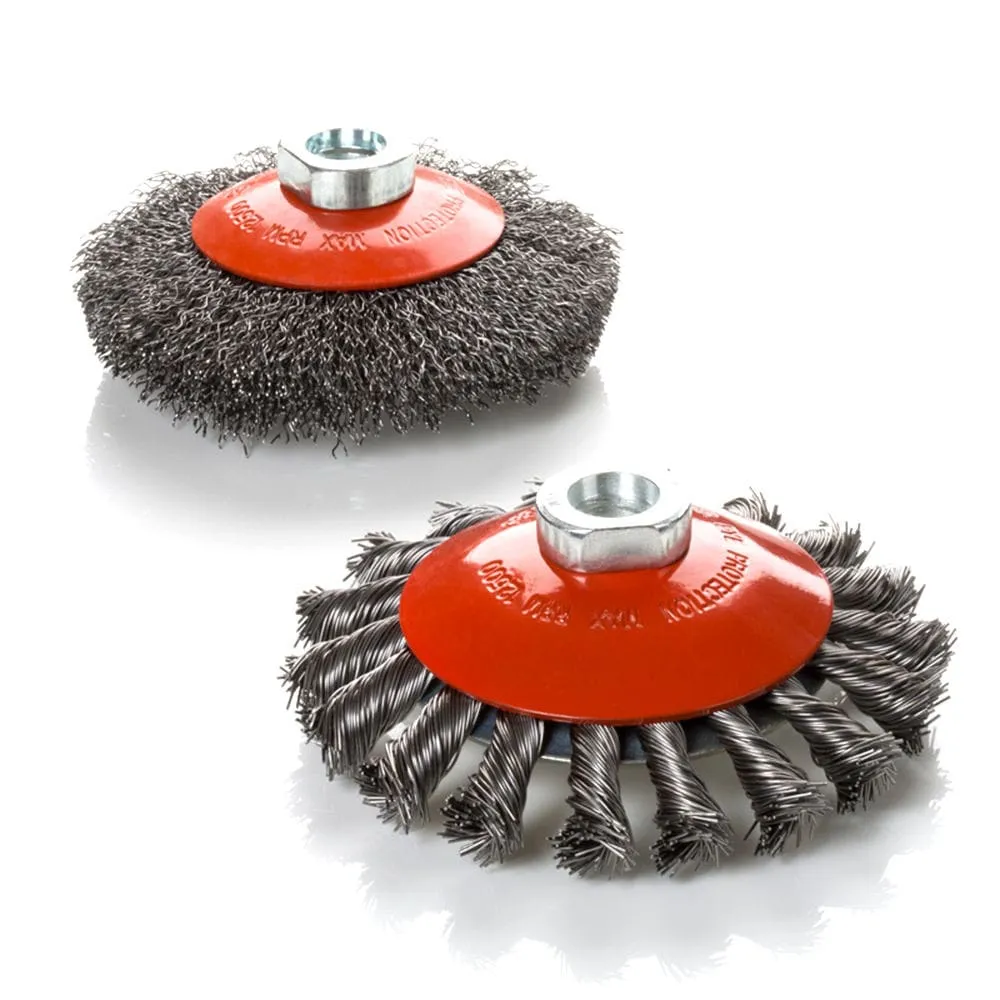
- Unraveling of Twist Knots: For twist-knot wire brushes, any single twisted node showing unraveled, splayed, or open wire strands. Under high-speed centrifugal forces, unraveled wire segments easily snap and fly off like projectiles.
- Loss of Dynamic Balance: Violent vibrations or wobbling during operation that cannot be corrected through normal reinstallation or balancing adjustments.
- Permanent Deformation of Nylon Wires: Abrasive nylon filaments that are severely bent (exceeding 30°) and fail to recover their shape even after hot-water reshaping treatments.
4. Why Wire Brush Cleanliness Directly Impacts Welding Quality and Surface Treatment Effects
In the fields of industrial welding and surface preparation, the cleanliness of a wire brush dictates more than just tool longevity—it governs the integrity of the final product.
According to welding quality control principles highlighted in ISO 15614 and AWS D1.1, the pre-weld surface condition (such as weld joint cleanliness and contamination control) is a decisive factor in weld quality. If the cleaning tools themselves harbor oil stains or foreign metal contamination, they will rub these impurities directly into the weld zone, triggering porosity, cracking, or subterranean corrosion.
Simultaneously, the SSPC-SP 3 power tool cleaning standard states that surface preparation must thoroughly remove loose oxide scales and contaminants. In practical applications, the cleanliness of the brush itself dictates the effectiveness of the scale removal and directly determines the subsequent adhesion performance of coatings.
Furthermore, per OSHA 1910.243 safety requirements for hand-held power tools, rotary wire brushes must run in sound condition. If wire filaments degrade due to contamination, accumulation, or structural fatigue, they fail to perform uniform surface conditioning while elevating the risk of cataclysmic tool failure.
Therefore, keeping your wire brushes clean is not an optional maintenance chore—it is a core engineering link required to guarantee weld quality, coating performance, and operational safety.
5. Reference
- American Welding Society (AWS). D1.1/D1.1M:2025-AMD1. Structural Welding Code – Steel.
- International Organization for Standardization (ISO). ISO 15614-1:2017. Specification and qualification of welding procedures for metallic materials – Welding procedure test – Part 1.
- Society for Protective Coatings (SSPC / AMPP). SSPC-SP 3. Power Tool Cleaning.
- Occupational Safety and Health Administration (OSHA). 29 CFR 1910.243. Portable power tools – Safety requirements.
6. Frequently Asked Questions (FAQ)
A6: The cleaning frequency of industrial wire brushes must be determined by specific operating conditions and process requirements, rather than rigid time intervals:
- Heavy descaling or weld spatter removal: Must be stopped and cleaned every 15 to 20 minutes of continuous operation, as slag accumulates rapidly.
- High-specification pre-coating surface treatment: Must be thoroughly cleaned after each individual workpiece to ensure zero cross-contamination.
- Routine deburring or light polishing: Should be swept clean after processing every 3 to 5 large workpieces, or immediately when the operator notices a slippery cut feel or a drop in material removal efficiency.
- Precision electronics / PCB cleaning: Must be thoroughly cleaned before the end of every shift, with specific attention paid to picking out microscopic solder accumulation using fine-tipped tools.





 English